Written by Falepaini
“An imperfect masterpiece is far more valuable than an idea that never leaves your mind.”
– Falepaini
The Illusion of Perfection
For weeks, I’ve been wrestling with words. The desire to write is there, but inspiration? Nothing. Just silence. Just me, staring at the screen, waiting—waiting for the perfect idea, the perfect flow, the perfect moment.
It’s frustrating—this feeling of wanting to create but being stuck in a cycle of overthinking. I want to write something meaningful, something that feels true to me. But between the stress of studying and life’s endless curveballs, my thoughts feel scattered.
The blinking cursor taunts me. The harder I chase the words, the further they slip away.
And then, there’s that voice in the back of my mind, relentless, persistent:
“Write something. Anything.”
“Write.”
“Write.”
“Write.”
And so, I’ve tried. I’ve probably written three or four different pieces, yet none have felt truly satisfying—not in the way my other blogs have, where I finish writing and feel that deep sense of fulfilment. That’s something I take pride in—making sure it’s perfect, ensuring that I say the right words, straight from the heart. My favourite thing to say is, “The words are wording.” Because when they do, when they flow effortlessly, I know I’ve done my job.
I often look to the universe and God for signs, waiting for that confirmation of what to post next. And surely enough, the answer always presents itself—through meditation, my doom-scrolling on social media, through the songs that randomly play on shuffle (I call it angel shuffle), or even through a simple conversation with someone about what they’re going through. And when that moment happens, I giggle, knowing without a doubt that this is the message I’m meant to share.
But for the past few weeks? Nothing. Silence. Just me, sitting here, wrestling with the dreaded thing any creative hates—writer’s block. And the thing about writing from the heart is that inspiration tends to strike at the most unexpected, inconvenient times.
So here I am—10 p.m. on a Monday night—with a health psychology case study due on Friday, worth 60% of my final grade. And yet, I’m here, staring at the screen, battling a creative itch I need to scratch before I can even think about studying.
Still waiting. Still searching. Trying to find the right words, the profound insight—the perfectly timed message that might reach someone exactly when they need it.
Then suddenly—I giggle. Because it hits me.
The very thing holding me back is the lesson itself.
Too often, I catch myself—guilty of not doing the things I want to do. I see the vision. I write down my to-do lists. I plan my next steps. And then? My overthinking mind kicks in, trapping me in a state of perfection paralysis—what psychologists call analysis paralysis. It’s a cycle of, “If I can’t get it right the first time—absolutely perfect—then I shouldn’t do it at all.” The fear of failure becomes so overwhelming that I avoid starting altogether.
Let’s be honest—if I don’t try, I can’t fail, right?
But here’s the thing. I recently came across something on Instagram that hit me right in the gut:
“Your trauma isn’t perfectionism. Your trauma is finding faults.”
And that truth sank deep.
For as long as I can remember, my parents always pointed out my mistakes before acknowledging my successes. The things I did wrong stood out far more than the things I got right. Over time, this shaped the way I saw myself—leading me to believe that my worth was tied to external validation.
In psychology, this is linked to conditional self-worth—a mindset where self-esteem depends on meeting certain expectations or achieving success. This often leads to perfectionism, fear of failure, and avoidance of creative risks—patterns I found myself trapped in.
That conditioning shaped me—it made me hesitant, made me fearful.
For years, I’ve wanted to write. But I always pushed the idea to the back burner, convincing myself that motherhood took up all my energy.
And while, yes, being a mother to two young kids was demanding, the truth is—I wasn’t just busy. I was scared.
Scared of putting my heart on paper and having the world reject it.
Scared of exposing the most vulnerable parts of myself and being met with silence.
Scared that if my dream—to leave an imprint on the world through words—failed, it would only reaffirm every negative thought I’ve ever been told or believed about myself since childhood.
Rejection trauma. People-pleasing. The deep-rooted fear of not being enough.
But then, I saw two quotes that shook me awake:
“Failure is not a person; it is an event.”
“It’s okay to fail—you only have to win once.”
In The Creative Act: A Way of Being, Rick Rubin emphasises the power of showing up for the ideas the universe gifts us. If we hesitate too long, overthink, or allow doubt to creep in, that idea might not wait—it may find someone else who’s ready to bring it to life. And that’s when we see something and think, That was my idea!
Rubin puts it simply:
“It isn’t because the artist stole your idea, but because the idea’s time has come” (p. 7).
When we let perfectionism hold us back—when we sit on our creativity instead of setting it free—we’re not just keeping ourselves stuck; we’re denying the world something only we can offer.
Each of us has something meaningful to contribute. But ideas don’t wait forever. The longer we hold back, the greater the chance they’ll find a voice elsewhere.
So why not us? Why wait? Why sit back and wish we had taken action?
This struggle with perfectionism isn’t just mine—it’s a battle that has haunted creatives for centuries. Even one of the greatest minds in history, Leonardo da Vinci, wasn’t immune to it.
Leonardo da Vinci and the Trap of Perfectionism
Leonardo da Vinci wasn’t just a master artist—he was also a relentless perfectionist. His genius was undeniable, but so was his habit of leaving things unfinished.
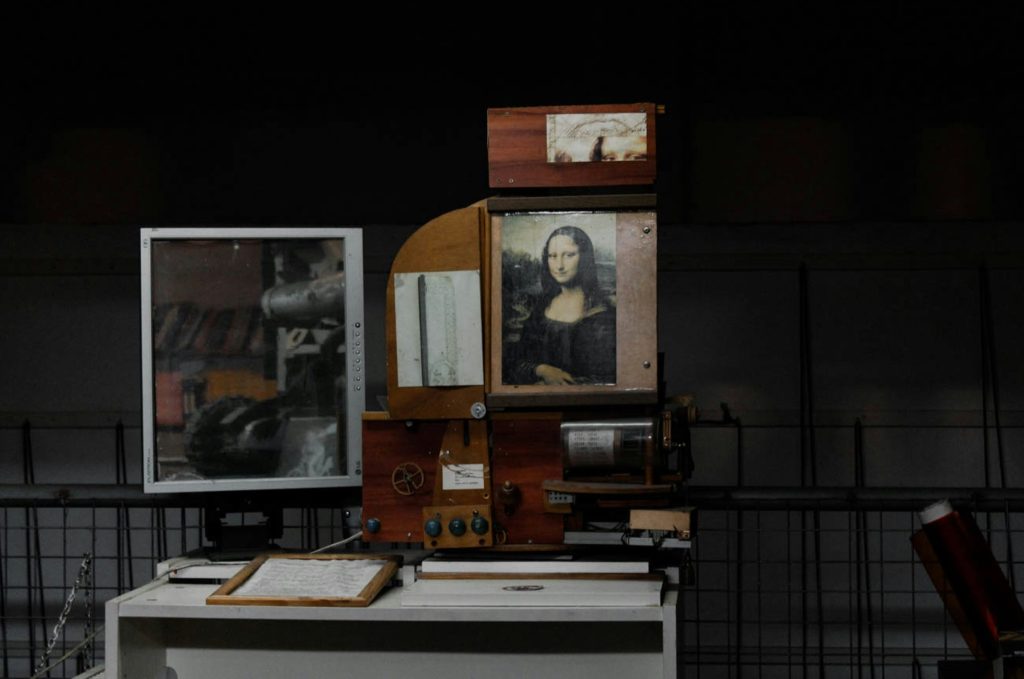
Take the Mona Lisa, for example. Da Vinci began painting it in 1503, but to him, it was never truly finished. Instead of delivering it to the person who commissioned it, he kept it for years—constantly refining every tiny detail. Even when he moved to France in 1516, he was still working on it, obsessing over its perfection—right up until the day he died in 1519.
And it wasn’t just the Mona Lisa. Many of his works were left unfinished because they didn’t meet his impossibly high standards. His obsession with perfection kept him from completing projects that could have been masterpieces.
Leonardo once famously said:
“Art is never finished, only abandoned.”
The Lesson from Da Vinci
His pursuit of perfection was both his greatest gift and his greatest obstacle. His meticulous nature contributed to his brilliance, but it also stopped him from sharing many of his works with the world.
How many ideas, dreams, or creations have we abandoned, believing they weren’t good enough?
How often do we hesitate to put something out there because we fear it won’t be perfect?
If even Leonardo da Vinci—one of the greatest artists to ever live—struggled with this, then it’s no surprise that many of us do too.
But his story teaches something important.
Perfection is an illusion.
Unfinished greatness is still greater than something that never sees the light of day.
Don’t let perfectionism hold you back. The world needs your work, even if it isn’t flawless. An imperfect masterpiece is far more valuable than an idea that never leaves your mind.
The Only True Failure
And maybe that’s where I’ve been going wrong.
Maybe the real lesson isn’t about writing the perfect blog, or saying the perfect words, or waiting for the perfect moment. Maybe it’s about starting, even when it feels uncomfortable.
We don’t need to have everything figured out before we begin.
We just need to take the first step—one word, one idea, one imperfect attempt at a time.
So, here I am. Writing, even when I feel stuck.
Writing, even when it doesn’t feel perfect.
Writing, even when “the words aren’t wording”—when they refuse to come together the way I want them to.
Because the only real failure isn’t writing something imperfect—it’s never writing at all.
And that same voice that once nagged at me?
“Write something. Anything.”
Maybe it was never a burden. Maybe it was the whisper of truth, nudging me forward all along.
Because at the end of the day, an imperfect masterpiece is still worth more than an idea that never leaves your mind. Waiting for perfection doesn’t serve the world—it only silences the gifts we were meant to share.
So, write. Speak. Create. Imperfectly, but with courage. Imperfectly, but beautifully.
And as I read this back to myself, I realise—this reminder isn’t just for others. It’s for me, too.
The world isn’t waiting for perfection—it’s waiting for authenticity.
It’s waiting for you. Raw. Unfiltered. Fearlessly imperfect.
x








 The House Of Pine
Leave a reply to hideoutpleasant282183aa2e Cancel reply