Written By Falepaini
How Mapping Emotional Echoes (M.E.E.) Helped Me Find My Voice Again
For years, I thought I was just moody, too much, or too sensitive—but beneath the surface were three distinct emotional voices longing to be heard. In this post, I share how journalling led me to create the M.E.E. method—Mapping Emotional Echoes—a soul-led healing practice that helped me reconnect with my Inner Child, Rebellious Teen, and Adult Self. This is how I found wholeness—not by silencing the noise, but by learning to listen.
When I Thought I Was Broken
I didn’t realise I was living as more than one version of myself. I thought I was just reactive. Too much. Or not enough. Too tired. Too sensitive. Too angry.
I thought maybe I was broken.
Damaged beyond repair.
But the truth was—I was crowded.
There was a girl inside me still aching for softness. A teenager still fighting to be seen. A woman who had given so much, she forgot she had a voice of her own.
Each part of me had something to say. But I was only ever listening to the noise—not the meaning behind it.
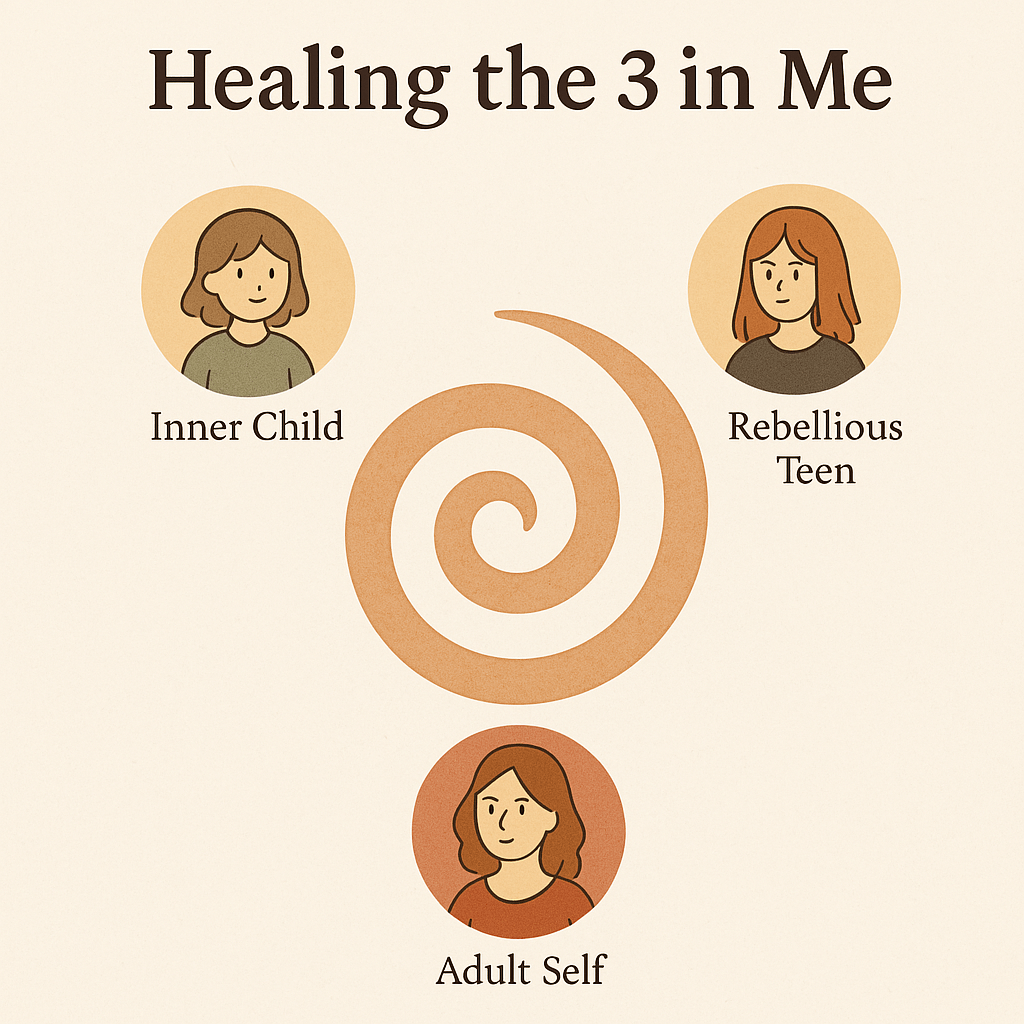
This became the heart of my healing journey, and ultimately, the foundation of the work I now share. In my earlier blog, I wrote about how we are not fragments, but a chorus of lived experience and emotional echoes. From that reflection, I developed what I now call the Healing the 3 in Me approach—a self-reclamation journey rooted in storytelling, reflection, and emotional truth.
And from that, the M.E.E. method was born: Mapping Emotional Echo, a framework that gave language to what I had always felt but never fully understood.
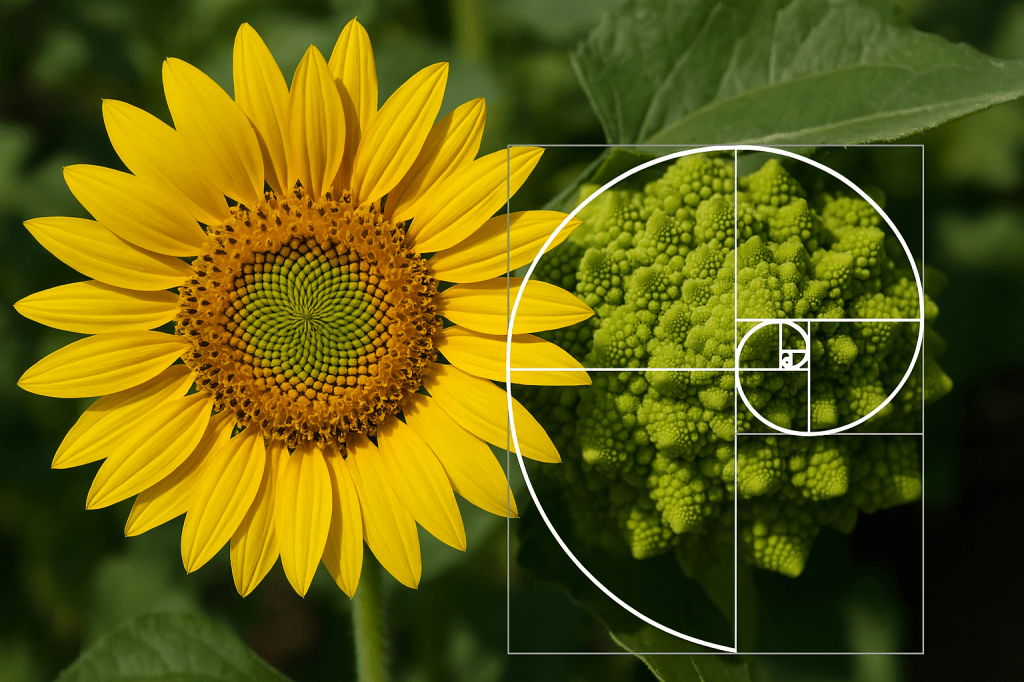
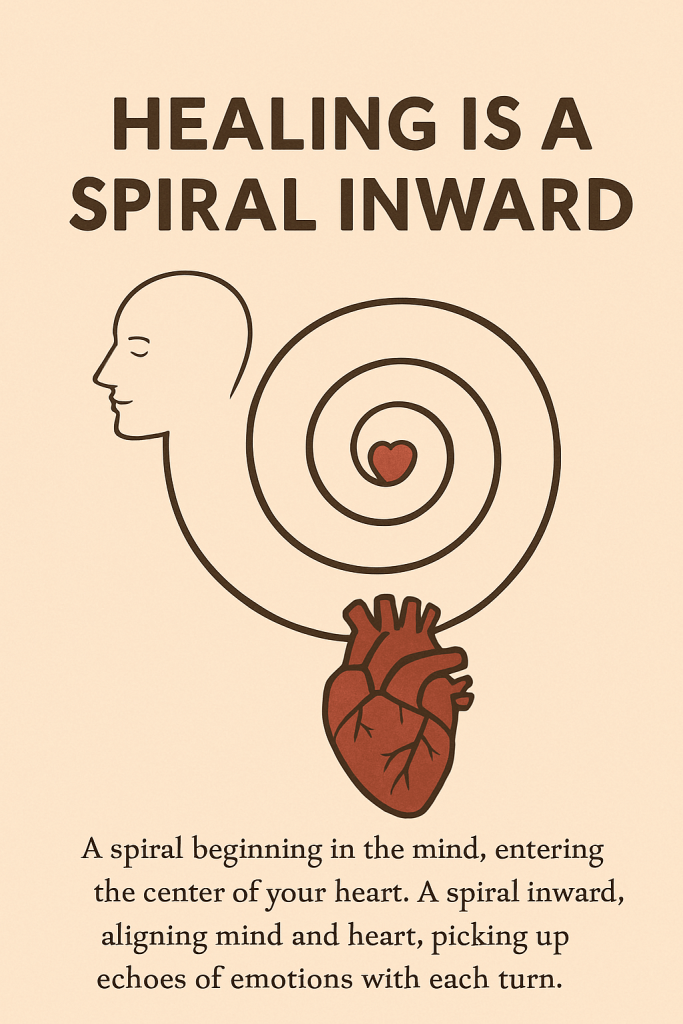
Healing, I’ve come to learn, isn’t a straight path forward—it’s a spiral inward. Much like the Fibonacci sequence found in nature—where growth unfolds in ever-widening circles of beauty and balance—our emotional healing moves in patterns too. The spiral begins in the mind, sparked by awareness, and winds its way into the centre of the heart. With each turn inward, it gathers the echoes of emotions long unprocessed—aligning the mind and heart through compassionate connection. Each emotional loop draws us closer to the truth of who we are—not to fix ourselves, but to feel ourselves. More deeply. More fully. More honestly.
*The Fibonacci sequence is a simple number pattern where each number adds up the two before it (like 1, 1, 2, 3, 5, 8…). This pattern shows up in nature—like the way flowers bloom, seashells spiral, or galaxies swirl—reminding us that real growth often follows gentle, natural curves instead of straight lines.
The Birth of M.E.E.
The M.E.E. framework wasn’t something I designed on a whiteboard. It began on a tear-stained journal page.
One day, feeling overwhelmed by emotions I couldn’t name, I opened my journal and let the pen take the lead. No structure. No plan. Just raw, unfiltered truth pouring out.
Page after page—fifteen in total on my first entry alone. I wrote and cried, cried and wrote. My hand hadn’t moved like that since high school. By the end of it, I could feel the cramp in my wrist—like even my body was shocked at how much I’d been holding in.
It wasn’t just emotional release. It was physical. Somatic. Real.
And somewhere in that emotional flood, something powerful happened. I started to notice patterns. I realised I wasn’t just writing about “bad days.”
I was writing about pain I’d carried since childhood. Moments I was dismissed as a teenager. The exhaustion of trying to hold everyone together as an adult.
It was like the ink revealed a map.
As I reread that entry and continued to journal over time, I began to recognise different emotional voices. I could feel the shift in tone and energy depending on what I was unpacking:
- The Inner Child who never felt safe or nurtured enough.
- The Rebellious Teen who fought to protect herself from betrayal, silence, or control.
- The Adult Self who gave until she was empty—then gave some more.
These weren’t just fleeting moods or passing memories. They were emotional echoes—alive in my nervous system, replaying old pain and unmet needs like a looped chorus longing to be heard.
In everyday life, I use three simple but powerful grounding questions to pause and bring awareness to what’s rising within me. These questions are my go-to in the heat of the moment—when I feel triggered, overwhelmed, or emotionally stirred. They help me stay present, regulate my nervous system, and begin the process of emotional mapping. The questions are:
- What just triggered me?
- Which version of me is reacting?
- What does she need from me right now?
These questions aren’t meant to fix the feeling or judge it. They’re about slowing down and listening—creating space for the emotional echo to be seen, felt, and heard.
But when it comes to deep, soul-led healing—when I want to move beyond momentary awareness and into real transformation—I follow something more foundational.
In psychology, emotional intelligence is often broken down into five core components: self-awareness, self-regulation, motivation, empathy, and social skills. These stages help us better understand ourselves and others. Similarly, my M.E.E. framework moves through five soul-led stages that guide emotional healing from the inside out.
These stages help us not only identify the emotional echo but also tend to it, express it, and ultimately integrate it into our healing story—with the ultimate goal being Self-Harmony: a state where the once-scattered echoes of our inner child, rebellious teen, and adult self are no longer clashing, but singing in sync. A chorus of inner voices, no longer competing for attention, but coexisting in resonance and wholeness.
The 5 Soul-Led Stages of M.E.E.
1. Acknowledge – Recognise the emotional trigger without judgement. The moment you choose awareness over autopilot. Instead of spiralling into shame or suppression, you stop and say, “Something’s been touched here.” It doesn’t matter if the trigger feels small or irrational. What matters is honouring the fact that something within you has stirred.
2. Understand – Identify which inner self is echoing and why. This is where the pause happens. Here is where you gently investigate the origin of the emotion. Is it the Inner Child longing to feel safe? Is it the Rebellious Teen resisting control or injustice? Is it the Adult Self overwhelmed by invisible responsibilities? This step is about turning inward with compassion and curiosity—not blame.
3. Express – Let that part of you speak, cry, or feel fully. Expression can come through tears, writing, movement, art, or simple stillness. This is where the energy moves. Instead of bottling it or overexplaining it, you let it out in its purest form. You let her cry the tears she swallowed years ago. You let her rage safely. You let her name what hurt.
4. Integrate – Offer her the truth, validation, or closure she never received. This is where healing begins to land. You become the loving witness, the protector, the truth-bringer. You say, “You were right to feel that. You didn’t deserve that. You are safe now.” You repair the rupture by honouring what was real for that version of you.
5. Self-Harmony – Reclaim your present power with softness and sovereignty. This is the return. The moment you come back to yourself. Not in fragments, but as one. You parent your inner world with grace. You lead your life from integration—not reactivity. This is not perfection. This is peace.
And with time, something remarkable happens. When you begin meeting each part of yourself with love, they stop shouting over one another. The noise softens, and in its place, a rhythm begins to emerge—a dialogue, a connection, a chorus of self that no longer feels like chaos, but like coming home.
Each time I return to a familiar wound, I’m not circling aimlessly—I’m spiralling inward with purpose. The spiral of healing draws me back not to relive the pain, but to meet it with new presence. With each turn, I gather echoes—of grief, rage, longing—and offer them compassion I didn’t have before. It’s not repetition. It’s reunion. With myself. More fully. More gently. More whole.
Learning to Listen
I call it a chorus because that’s truly what it feels like now. My Inner Child, Teen, and Adult Self—they don’t need to fight over the mic anymore. They each have space to be heard, and more importantly, held.
For years, their voices layered over one another like an emotional storm. One screamed for attention. One wept quietly beneath the noise. One just kept moving—numb, busy, over functioning. I thought I was losing control. But really, I was finally getting closer to the truth.
Some days, one speaks louder than the others. Other days, I catch them harmonising—a kind of emotional rhythm that feels like alignment. That’s when I know I’m present. I’m listening. I’m home.
Healing isn’t about silencing your past. It’s about learning how to hold the full soundscape of your story—the whispers, the cries, the silences—and respond with grace.
It’s realising that you can feel anger and still choose compassion. That your tears don’t mean regression—they mean recognition. That your triggers are not weakness—they’re invitations to revisit the echoes that never got closure.
But healing is not just revisiting. It’s not staying there, re-reading the same page of your pain. It’s reaching back with love—and pulling that version of you forward. It’s wrapping your arms around the child who needed to be safe. It’s standing beside the teen who needed to be heard. It’s honouring the woman who forgot she was allowed to need.
It’s telling each part of you: “You don’t have to carry this alone anymore. We’ve got you now.”
That’s what M.E.E. gave me. A way to move through the echo—without getting trapped inside it. A way to give language to pain, and a path for returning to wholeness.
And now, it’s not just a practice. It’s a way of being. Of relating to myself. Of parenting my inner world. Of singing back to the parts of me that once cried in silence—and letting them know:
We made it. We’re listening. We’re free.
🛑 Before You Begin: Honour Your Emotional Capacity
Healing doesn’t ask you to sprint through your pain—it invites you to walk gently with it.
If you choose to begin exploring your emotional echoes, let this be your reminder:
Go slow. Go soft. Go honest.
You do not have to unpack everything at once. You do not have to revisit every wound in one sitting.
This is not a race—it’s a return. To yourself. At your own pace.
Here are a few soul-boundaries I offer to anyone beginning this process:
- ✦ Set a timer (e.g., 20–30 minutes) for journalling or emotional exploration so you don’t sink too deep without coming up for air.
- ✦ Ground yourself before and after—use breathwork, walk barefoot, stretch, or sip tea to signal to your nervous system: we are safe now.
- ✦ Create a closing ritual. Even if it’s just writing one gentle sentence like, I am safe to feel, and I am free to rest.
- ✦ Name your edge. If you feel overwhelmed, pause. That is the work—learning to feel without flooding. You can always come back to it tomorrow.
- ✦ Don’t do it alone if it feels too big. Let someone you trust hold space. Or seek the support of a trauma-informed professional who can walk alongside you.
The most powerful boundary is your own self-permission:
I get to choose how deep I go. I get to stop when I need to. I get to protect my peace.
Healing honours your capacity. You can meet your past with grace—without drowning in it.
Disclaimer:
The M.E.E. (Mapping Emotional Echoes) method and the Healing the 3 in Me framework are original intellectual property created and developed by Falepaini. These frameworks and associated materials are intended solely as reflective self-awareness tools to support personal growth, emotional exploration, and soul-led shadow work.
This content is not a replacement for clinical psychological treatment, counselling, or therapy conducted by a licensed mental health professional. If you are experiencing severe emotional distress, trauma, or mental health challenges, you are strongly encouraged to seek professional guidance from qualified therapists or healthcare providers.
The references included below provide psychological context and evidence-based grounding for the ideas behind the M.E.E. framework. They highlight established theories and practices that resonate with my personal experience and inform my method, demonstrating the intersection of academic insights and intuitive self-reflection.
References
Berne, E. (1964). Games people play: The psychology of human relationships. Grove Press.
Bowlby, J. (1988). A secure base: Parent-child attachment and healthy human development. Routledge.
Levine, P. A. (2010). In an unspoken voice: How the body releases trauma and restores goodness. North Atlantic Books.
Neff, K. D., & Germer, C. K. (2018). The mindful self-compassion workbook. Guilford Press.
Pennebaker, J. W., & Evans, J. F. (2014). Expressive writing: Words that heal. Idyll Arbor.
Pennebaker, J. W., & Smyth, J. M. (2016). Opening up by writing it down. Guilford Press.
Porges, S. W. (2017). The pocket guide to the polyvagal theory. W. W. Norton & Company.
Schwartz, R. C. (2021). No bad parts: Healing trauma and restoring wholeness with the Internal Family Systems model. Sounds True.
Siegel, D. J. (2012). The developing mind (2nd ed.). Guilford Press.
One response to “Healing the 3 in ME: Understanding My Inner Chorus”
-
[…] resonate with something deep within you, please know that this is only the beginning. In my guide, Healing the 3 in Me: Understanding My Inner Chorus, I delve even deeper into how we can nurture every part of ourselves that still yearns for […]
LikeLike







 The House Of Pine
Leave a reply to Planted, Not Buried: The Garden of Healing – The House Of Pine Cancel reply